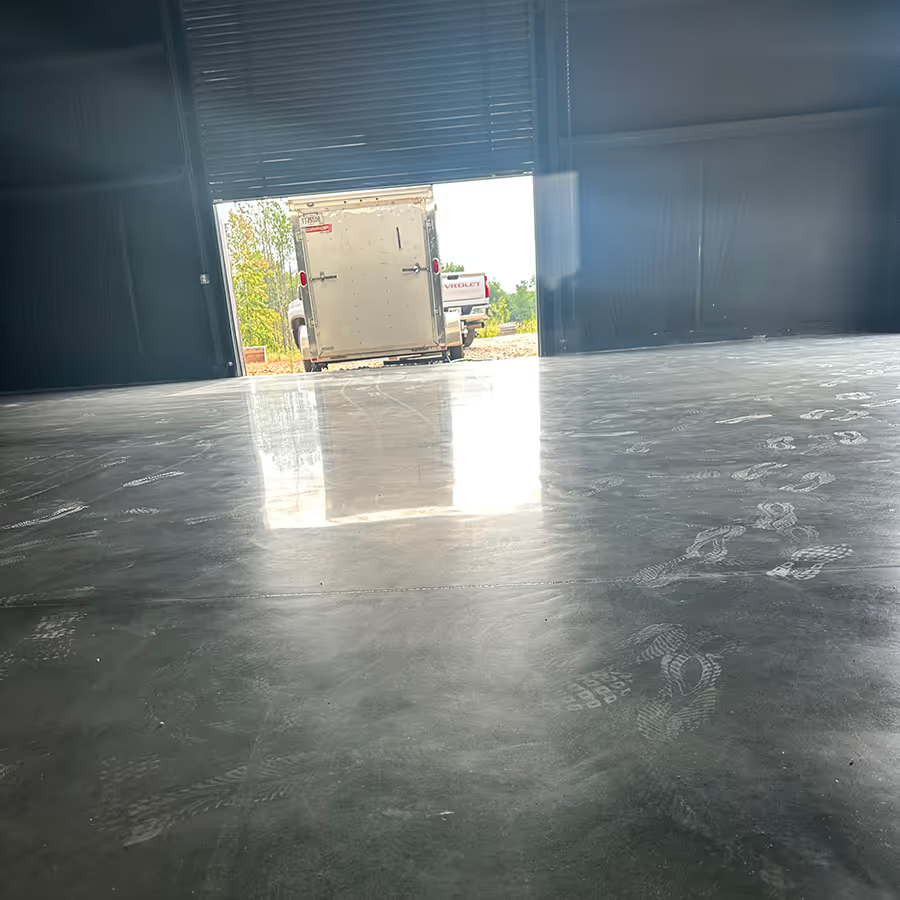
How we phase the work in a working building
- Free on-site quote. Call (404) 480-0962 or request one online. For industrial buildings we walk the floor with you and plan the phasing.
- Surface preparation. We remove old coatings and sealers, then repair joints, cracks and spalling around dock doors and racking.
- Grinding. Coarse diamond tooling flattens the slab and opens the surface for the densifier.
- Honing and densifying. Finer diamonds refine the surface while a densifier hardens the concrete against abrasion and stops it dusting.
- Polishing. We take each area to its specified sheen, seal it, and walk the building with your facilities contact before signing off.
Norcross polished concrete: common questions
Can you polish our floor without shutting the building down?
Almost always. We phase industrial floors in sections so you keep operating, and we work nights and weekends where that suits you better. It usually means moving racking or stock in stages, so we plan the sequence with your facilities contact at the quote. Dust-controlled grinding also means neighboring areas can stay in use while we work.
Will it stand up to forklift traffic?
Yes, and it generally outlasts a coating in that environment. Polishing hardens the slab itself, so there is no film to chip at the edges or peel under a turning wheel. Densifying is the key step: it closes the surface so abrasion does not grind the concrete into dust. Joints still need attention, and we repair or fill those during preparation because that is where forklift damage usually starts.
Our warehouse floor creates dust. Will polishing fix that?
That is one of the main reasons Norcross facilities call us. Bare concrete dusts because the surface is soft and porous, and traffic abrades it away continuously. A densifier reacts chemically with the slab to harden that surface, and polishing closes it further. The result is far less airborne dust, which matters if you are storing product, running electronics, or handling anything food or pharmaceutical related.
How long does an industrial floor take?
It depends on square footage and how much repair the slab needs, but large open spans move quickly once we start. There is no cure wait like a coating, so an area is back in service almost straight after we finish it. That is what makes phasing practical: we can hand back one section and move to the next rather than closing the whole building for a week.