

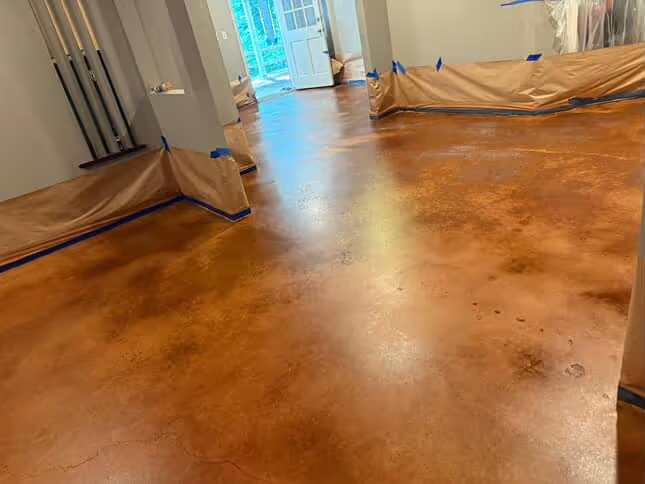
Microtopping: Ultra-Smooth Concrete Resurfacing
Microtopping concrete is a two-component system designed to resurface worn or dated surfaces with a refined, ultra-smooth finish. It's ideal for both floors and walls, creating an elegant appearance while preserving the character of the original surface. Perfect for microtopping flooring in retail, office, and residential environments, it delivers durability and aesthetic value in one solution.
ACC Facility Services uses microtopping to bring your vision to life with a wide range of microtopping textures, from matte to polished, and color options that complement your design. Because it bonds directly to the substrate, microtopping minimizes downtime and disruption, ideal for fast-paced renovations in Atlanta's competitive real estate and commercial markets.


Microcement: Durable Elegance for Walls and Floors
Microcement floors offer a seamless, polished look that enhances any interior design while providing exceptional durability. This cement-based coating can be applied directly over existing surfaces, such as concrete, tile, or drywall, making it a cost-effective option for renovations. Whether you're designing microcement bathrooms or transforming your living space, the versatility of this finish delivers both style and performance.
In high-humidity areas like bathrooms and kitchens, microcement shines with its water resistance and easy maintenance. It creates a sleek, joint-free surface that resists mold and mildew. For commercial properties and homes across Atlanta, microcement is the go-to choice for a contemporary look that withstands heavy use without compromising beauty.
Ready for a Seamless, Stylish Upgrade?
Bring Modern Concrete Aesthetics to Your Space
At ACC Facility Services, we specialize in seamless, high-end surfaces that redefine your interiors. Whether it's microcement in a living space or microtopping in a high-traffic commercial area, we're here to bring your vision to life.
Contact us today to schedule a consultation and elevate your floors and walls.
Why Choose Microtopping and Microcement in Atlanta?
Our seamless wall and floor applications don't just look great, they're built to last. Whether for residential design or commercial use, these materials offer a blend of performance and style ideal for modern interiors.

Long-Lasting Performance
Microcement and microtopping are built to resist cracking, chipping, and daily wear, making them perfect for high-traffic areas.

Seamless & Stylish
With no joints or grout lines, these finishes create a sleek, continuous surface that elevates any room's design.

Easy Maintenance
Their non-porous nature makes cleaning a breeze, ideal for homes, offices, or microcement bathrooms.

Custom Finishes
From natural microtopping textures to polished microcement floors, the look is fully tailored to your vision.
How a microcement floor is built up
Microcement is not a paint and it is not a pour. It is a layered system, and almost all of its durability comes from what happens underneath the finish coat rather than from the finish itself.
- Substrate preparation. The existing surface is cleaned and abraded so the primer has something to key into, and anything loose comes off. Movement is the enemy of a thin coating, so hollow tiles, drummy spots and failing adhesive get dealt with at this stage instead of being covered over.
- Primer. Different substrates need different chemistry. A porous concrete slab, a glazed tile and a drywall wall do not take the same primer, and using the wrong one is the most common reason a thin coating lets go later.
- Base coats with reinforcement. Two base layers go on with a fiberglass mesh embedded between them. The mesh spreads stress across the whole surface rather than letting it concentrate over a joint or an existing crack.
- Finish coats. Two thinner layers are troweled on and sanded back between passes. This is the stage that decides the texture, because the trowel work is the pattern.
- Sealing. Several coats of sealer go on last. On a floor this is what delivers the stain and water resistance, and it is the layer that gets renewed over the years rather than the microcement underneath it.
The finished build is only around an eighth of an inch thick. That is the whole point of the material: it can go over a floor that is already there without raising the level enough to matter at a doorway, a stair nosing or an appliance.
What microcement can go over
The appeal is that it goes over what you already have, and for most renovations that holds true. What matters is whether the surface underneath is sound and, above all, still.
- Concrete slabs take microcement well, as long as moisture has been tested first. A slab pushing vapor upward will drive a thin coating off the surface no matter how careful the application was.
- Tile is one of the most common substrates. Grout lines have to be filled and the glaze abraded, or those lines telegraph through as faint shadows once light crosses the floor at an angle.
- Drywall and plaster work well on walls, which is a large part of why microcement ends up in showers, powder rooms and feature walls.
- Wood subfloors are the hardest case. Plywood moves with the seasons, and a rigid coating over a deck that moves will crack. It can be done with the right decoupling layer, but it is a judgment call on the specific floor rather than an automatic yes.
Where a slab is out of level or badly worn, that gets corrected before any microcement goes down. Depending on what the floor needs, that is either floor leveling or concrete resurfacing.
Microcement, polished concrete or epoxy
These finishes get compared constantly, and they solve genuinely different problems.
- Microcement and microtopping are thin decorative layers applied over an existing surface. Color is chosen rather than inherited, the result is seamless, and it works on walls and stairs as readily as on floors.
- Polished concrete is not a coating at all. It is the slab itself, ground and refined until it shines. You take the color the concrete gives you, but nothing is sitting on top that can wear through. A grind and seal sits between the two.
- Epoxy and polyurea are built for chemical spills, hot tires and impact. They belong in garages, shops, commercial kitchens and plants, and they are far less subtle than microcement in a living room.
If you have a sound slab and want the concrete look with the least long-term maintenance, polished concrete is usually the better answer. If you want a particular color, a seamless surface running from floor to wall, or a finish over an existing floor you would rather not demolish, that is what microcement is for.
Where microcement works, and where it does not
It suits bathrooms and showers, where a joint-free surface removes the grout that usually fails first. It suits kitchens, retail units and hospitality spaces where a seamless floor reads as considered rather than builder standard. It suits feature walls, stairs and risers, and it suits condo and apartment renovations where demolition is restricted or the floor level simply cannot come up.
In a wet area, the waterproofing membrane underneath the microcement is what keeps water out of the structure. The sealer on top protects the finish, but it is not a substitute for that membrane, and any installer who tells you otherwise is skipping a step.
It is the wrong choice on exterior surfaces exposed to freeze and thaw, over a slab with a moisture problem nobody has addressed, and on any floor that flexes underfoot. Outdoor concrete around water is a different job with different materials: see pool deck resurfacing.
Color, texture and sheen
Pigment runs through the material rather than sitting on top of it, so a knock does not expose a different color underneath the way a painted floor does. The texture comes from the trowel, which means no two floors are identical and a degree of movement in tone across a large room is part of the look rather than a fault.
Sheen is set by the sealer, not by the microcement, and it changes the character of the floor more than most people expect. A matte sealer reads closest to raw concrete and is the most forgiving with footprints and fine scratches. A satin sealer adds a little depth to the color. A gloss sealer makes the color deepest and the surface most reflective, and it shows every mark. Sample panels are the honest way to choose, because a photograph of a microcement floor tells you almost nothing about how it will look in your own light.
Living with a microcement floor
Day to day it is a low-maintenance surface. Sweep or vacuum the grit, then clean with a pH neutral product. Avoid abrasive pads and anything acidic, because both attack the sealer rather than the microcement and the sealer is what is doing the protecting.
Over the years the sealer wears where the traffic is heaviest, usually the entrance and the main walking line. Renewing it restores the surface without touching the microcement underneath, which is a far smaller job than replacing a floor. Grit tracked in from outside is the single biggest cause of a dulled sealer, so mats at the doors do more good than any product you can buy.
What microcement costs in Atlanta
Preparation drives the number more than the finish does. The things that move it:
- The condition of what is already there, and how much has to happen before the first coat goes on.
- Floors, walls, or both. Vertical work is slower per square foot than floor work.
- Wet areas. A shower or a bathroom needs waterproofing detailing that a living room floor does not.
- Area and layout. Large open floors run more efficiently than small rooms, closets and tight hallways.
- Stairs. Treads, risers and nosings are hand work and are quoted separately from the field.
- The finish itself. A tight, uniform look takes more passes than a heavily textured one.
We do not publish a price per square foot, because on a surface nobody has seen yet that number would be wrong. What you get instead is a free on-site visit and an itemized quote, with preparation priced separately so you can see what each part of the job costs. Call (404) 480-0962 or use the quote form on this page.
What Our Customers Say
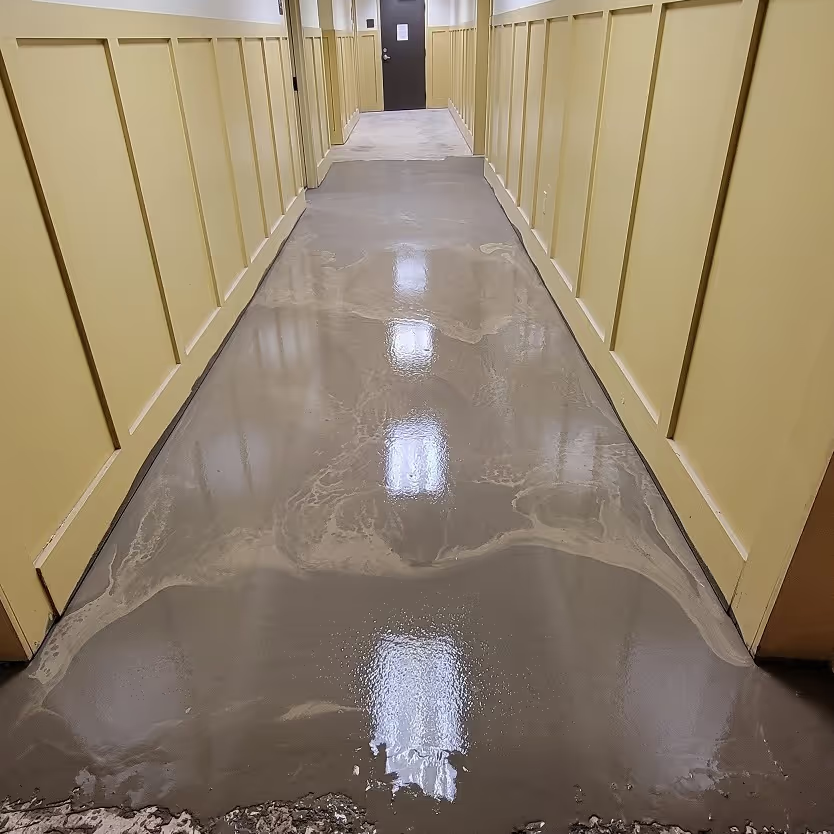
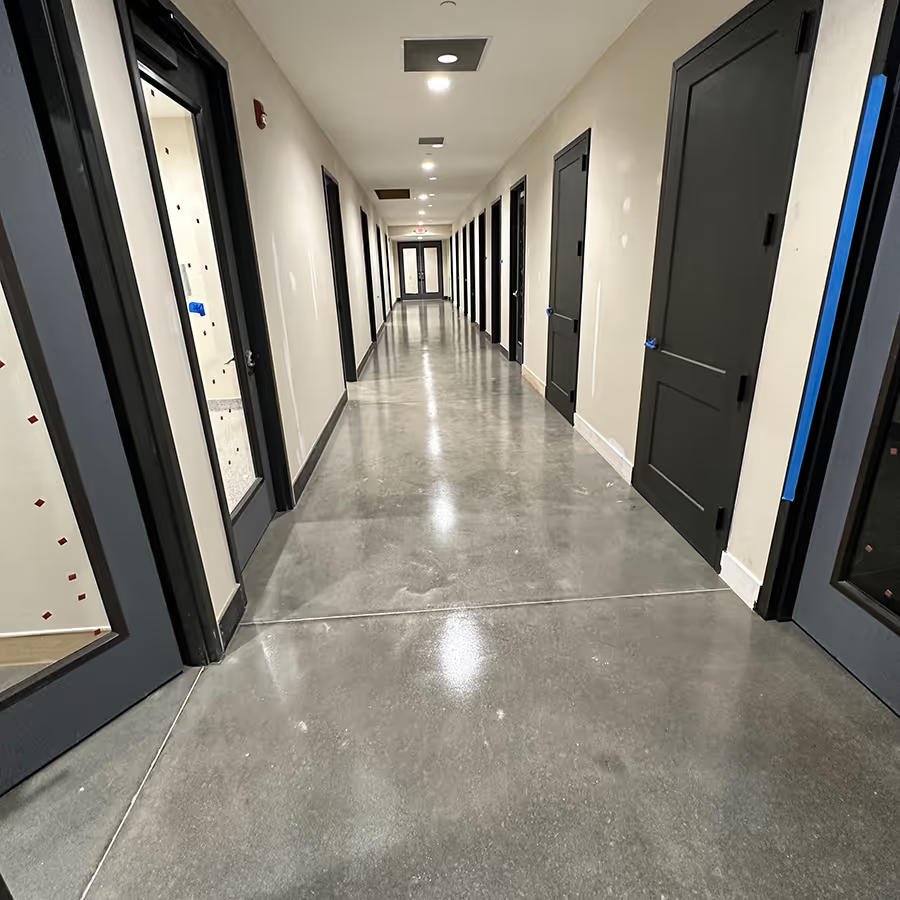
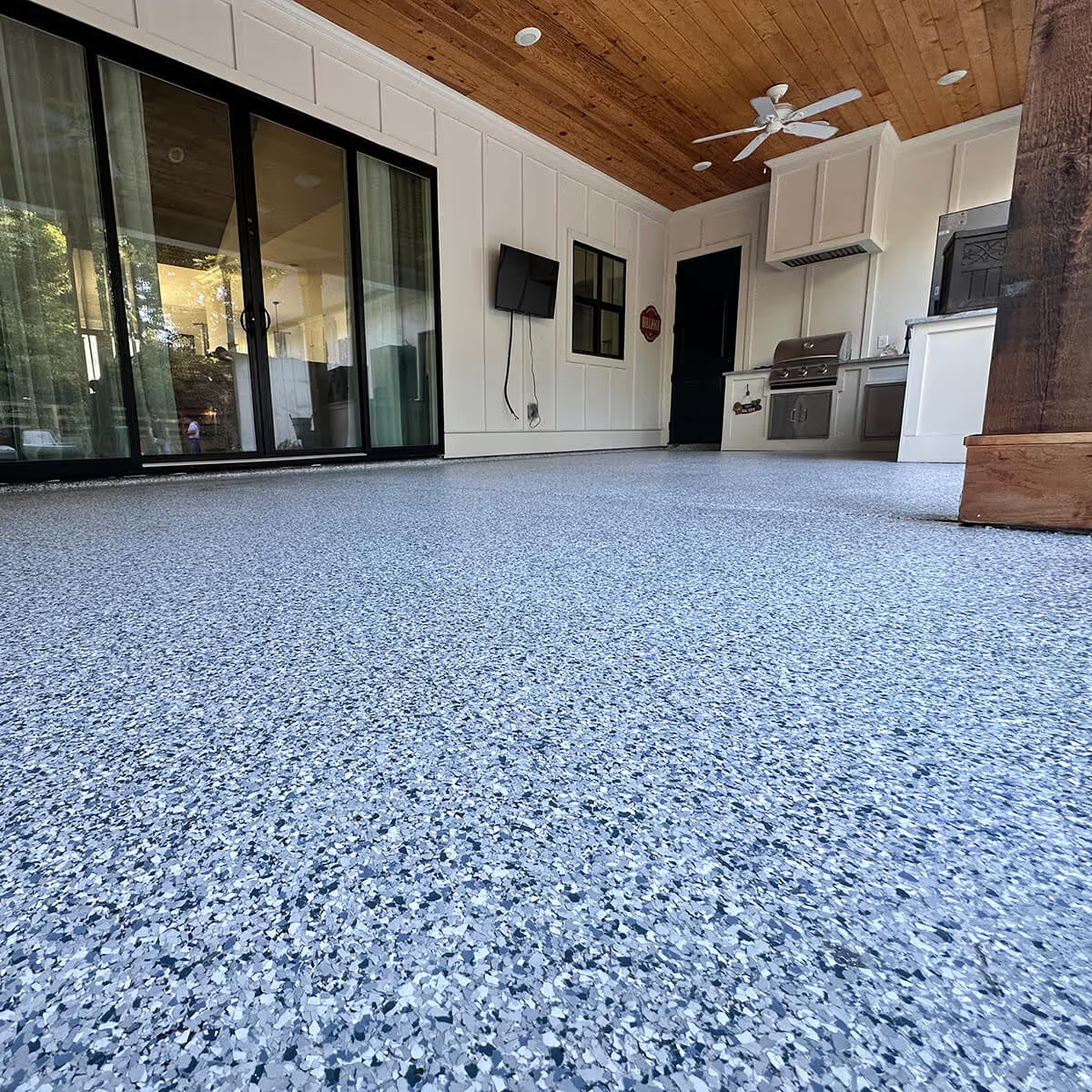
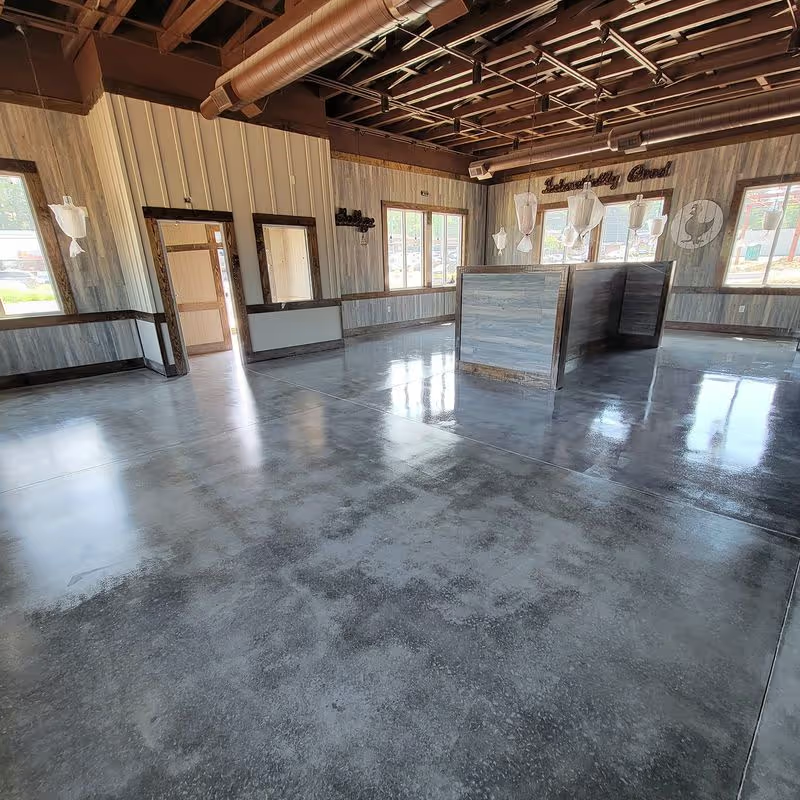
Some of our most recently completed Microcement floors in Atlanta, GA