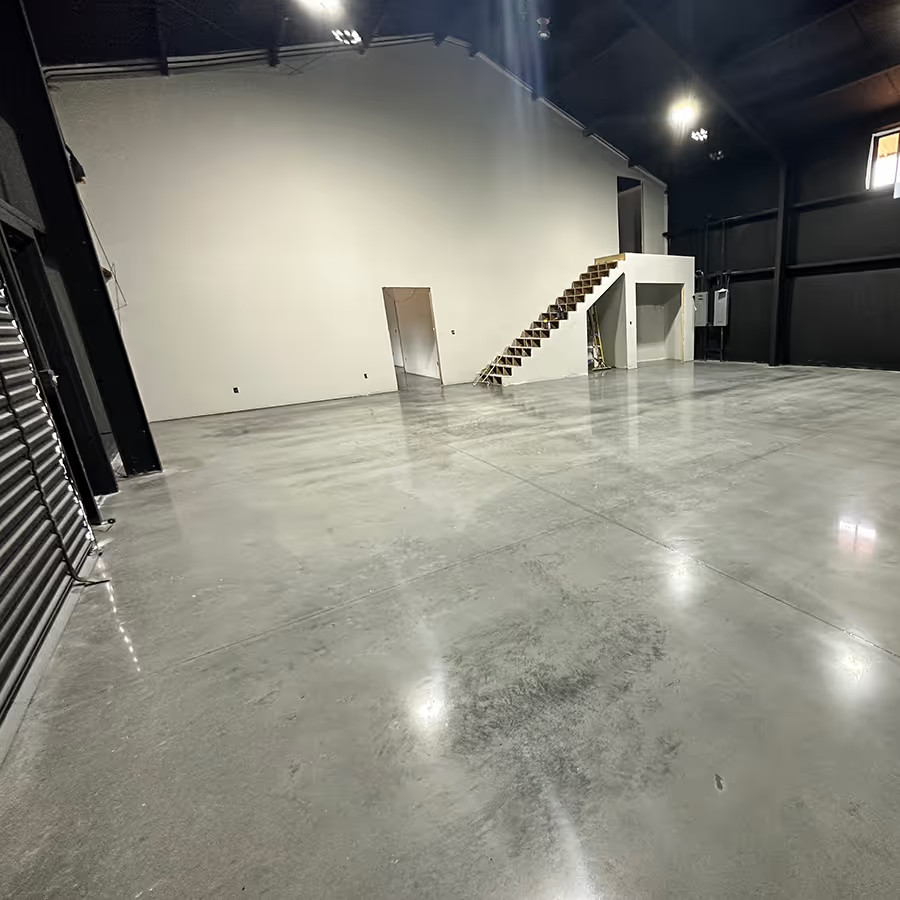
How we map wet and dry zones before grinding
- Free on-site quote. Call (404) 480-0962 or request one online. We will walk the facility, map wet and dry zones, and agree the specification for each area.
- Surface preparation. We strip old coatings, repair eroded and damaged areas, and prepare joints.
- Grinding. Coarse diamond tooling flattens the slab and removes surface damage.
- Honing and densifying. Finer diamonds refine the surface while a densifier hardens it against traffic and wash-downs.
- Polishing. We bring each area to its specified sheen, seal it, and hand over with a sanitation-friendly care plan.
Gainesville commercial concrete polishing: common questions
Is polished concrete suitable for food handling areas?
In dry and low-moisture areas, yes. A densified, sealed slab is non-shedding, resists absorption and cleans quickly, which is exactly what an audit wants to see, and unlike a coating there is nothing to flake off into product. In heavy wet processing rooms with hot wash-downs and chemical exposure, a urethane cement floor is usually the better tool, and we will spec zone by zone rather than force one answer on the whole plant.
Can the work be phased around production?
Yes, and in Gainesville it usually has to be. We work nights, weekends and sanitation windows, and split floors into sections so racking and lines move once, not twice. Polishing has no long cure lockout, so a section we finish overnight can take traffic in the morning. We plan the phasing with your operations team at the quote stage, not after mobilizing.
How does it hold up to wash-downs and cleaning chemicals?
Well, if it is specified for the exposure. The densifier reacts into the slab and hardens it, and the guard products we finish with resist water and neutral to mildly alkaline cleaners, which covers most sanitation regimes. Strong acids will etch any concrete floor over time, so where acidic cleaners are unavoidable we spec accordingly. We hand over with a care plan matched to the chemicals your crew actually uses.
Can you meet slip resistance requirements in wet areas?
Yes. Slip performance is set by sheen level and surface treatment, so we run lower-gloss specifications in wet and transition zones and can add slip-resistant treatments where a plant standard requires a tested value. Entrances, dock aprons and wash bays get planned as their own zones. Tell us the standard you work to and we will spec and document against it.