How we coat a shop without closing the whole floor
- Free on-site survey. Call (404) 480-0962 or request one online. We check the slab for oil contamination and moisture, and count the bays.
- Bay schedule agreed. We plan which bays release when and how fast each returns to service, so you are never down more than you agreed to be.
- Degrease, grind and repair. The bay is degreased and mechanically ground to clean concrete, then cracks, pitting and lift pad damage are repaired.
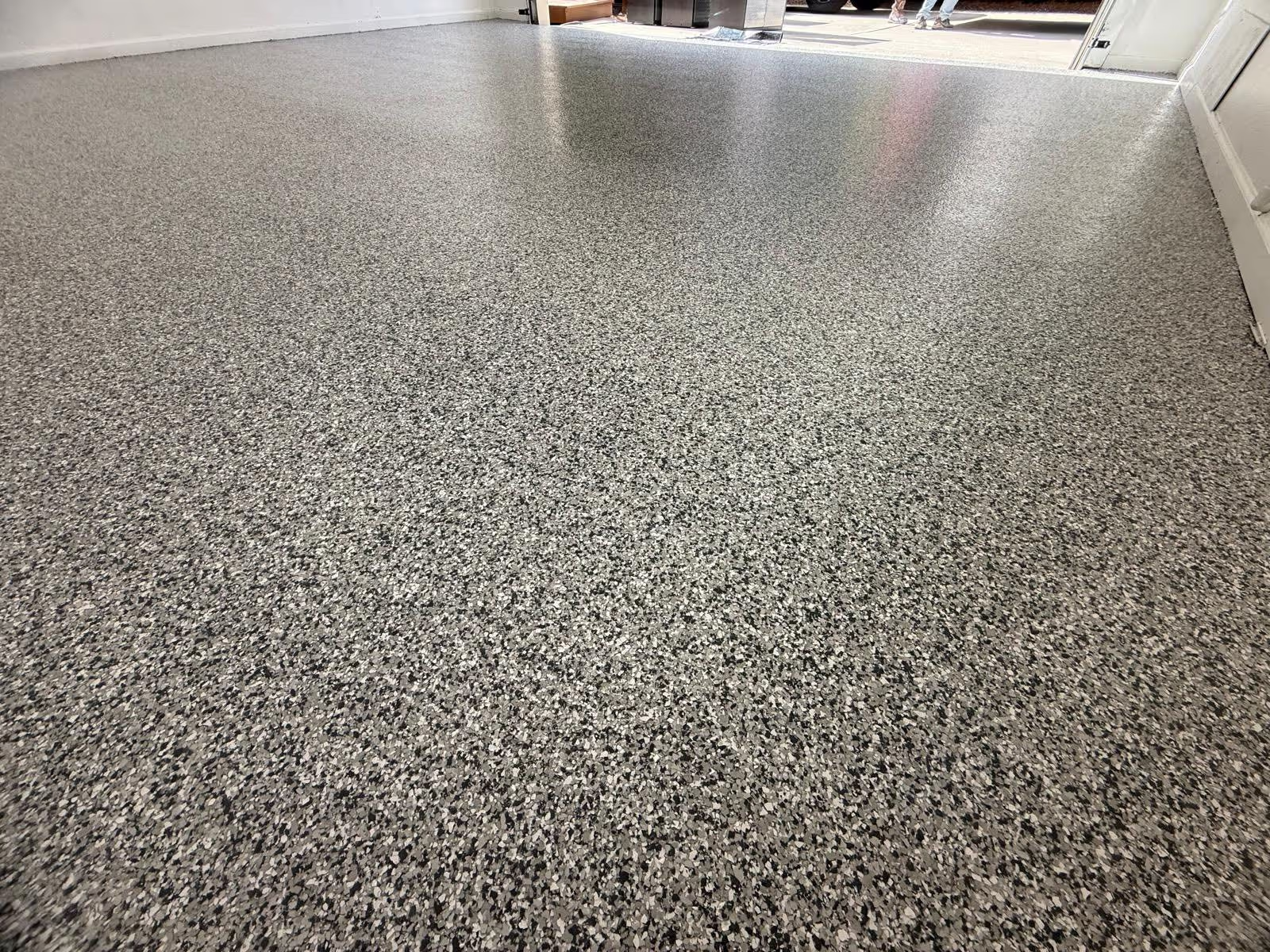
- System build and topcoat. The base coat, flake or quartz broadcast and chemical resistant topcoat go down, with reinforcement at the lift posts.
- Striping, cure and handback. Bay lines and walkways are striped where you want them, then the bay is handed back as soon as the coating carries traffic.
Shop floor coating in Lawrenceville: what owners ask
How much does auto shop floor coating cost in Lawrenceville?
It is priced per bay and per square foot on the system specified and the state of the slab, and every shop is surveyed and quoted for free. What moves the number most is preparation, because a failed coating or concrete soaked with years of oil has to be ground back and decontaminated before anything new will bond. Turnaround matters too: a fast cure polyurea costs more per foot than a slower epoxy build and saves you days of lost bay time. Preparation, coating and striping are itemized separately.
How long is a bay out of service?
With a polyurea or polyaspartic build, usually about a day: coated in the morning, taking foot traffic that evening, back under vehicles the following day. A full high build epoxy system with flake needs more like three to four days per bay, because of the cure time between coats. We work bay by bay so the rest of the shop keeps taking work, and you get the return to service time for each bay before we start.
Will hot tires lift the coating?
Not with a properly specified commercial system, and hot tire pickup is exactly why the retail kits fail. A tire coming off the highway is hot enough to soften a thin, low solids coating, bond to it, and pull a patch out when the vehicle moves. The systems we install are high solids and go down over a mechanically prepared slab, so the bond to the concrete is far stronger than the tire's grip on the surface.
Our floor is soaked in oil. Can it still be coated?
Usually yes, but the preparation is the job rather than an afterthought. Oil that has soaked into concrete has to be drawn back out and the surface mechanically ground, because a coating applied over contaminated concrete will not bond and will peel away in sheets. We test at the survey and tell you honestly what the slab needs. Where a section is too far gone to save, we will say so rather than coat it and hope.